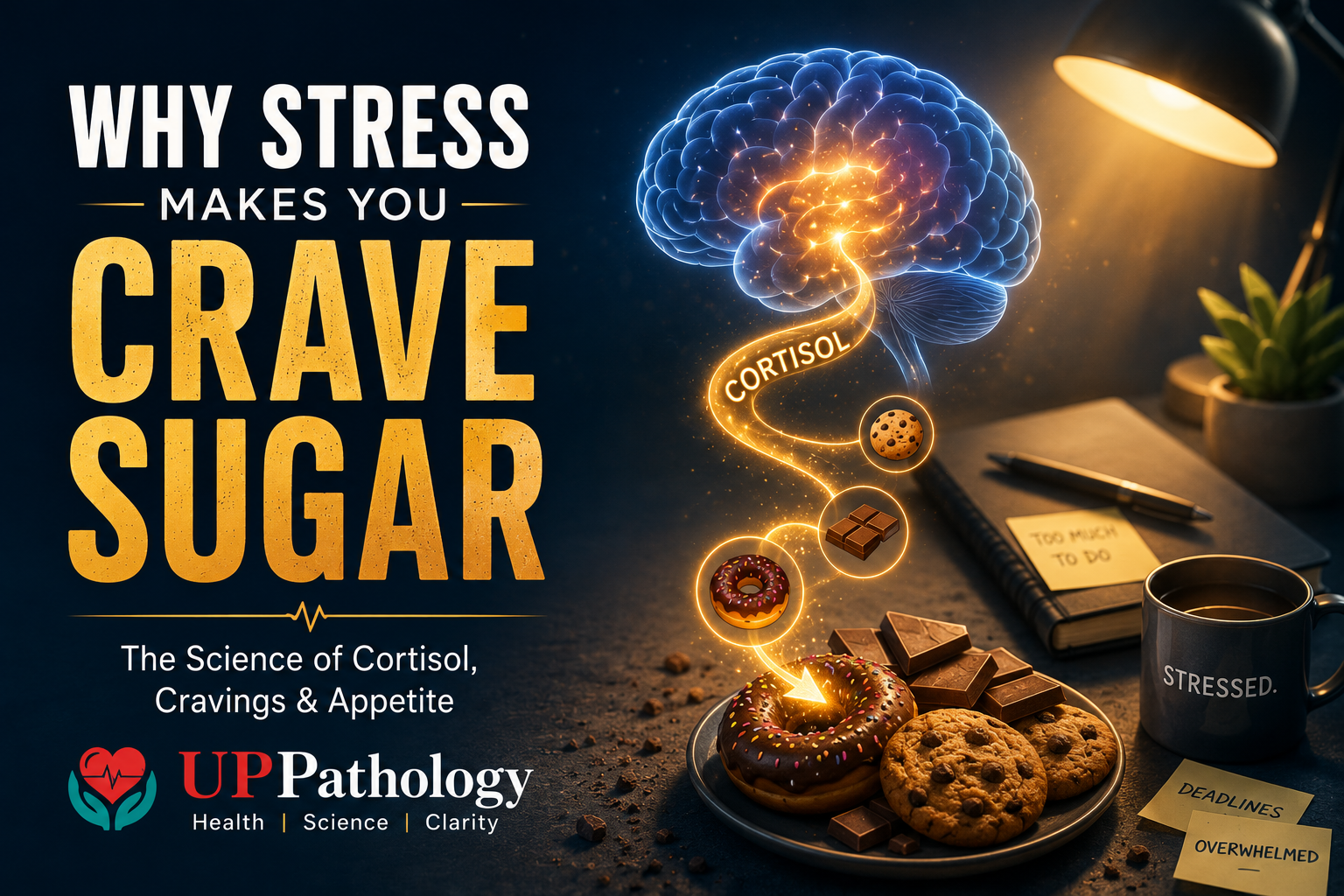
Discover why cortisol makes you crave sugar and how stress changes your hunger. Learn the science behind stress eating, sugar cravings, and practical ways to regain control naturally.
Thank you for reading this post, don't forget to subscribe!Stress doesn’t just affect your mood—it can also change your appetite. When stress increases, the hormone cortisol may make high-sugar foods seem more appealing because your brain is looking for quick energy and comfort. Understanding this process can help you make healthier choices without relying only on willpower. Understanding why cortisol makes you crave sugar can help explain why stressful days often lead to stronger cravings for sweets instead of healthier foods. Once you recognize this connection, it becomes easier to build healthier eating habits.
⚡ Quick Answer
Cortisol is a hormone your body releases during stress. When cortisol stays high for long periods, it may increase cravings for sugary and high-calorie foods because your brain wants quick energy. This is one reason many people crave chocolate, desserts, or snacks during stressful situations.
📖 Quick Definition
What Is Cortisol?
Cortisol is often called the “stress hormone.”
Your body naturally releases cortisol to help you deal with physical and emotional stress.
In small amounts, cortisol is helpful.
It helps you:
- Stay alert
- Wake up in the morning
- Respond to challenges
- Maintain normal body functions
The problem begins when stress doesn’t go away.
When cortisol stays elevated for days or weeks, it can influence your appetite, food choices, and eating habits.
🌟 Psychology Hook
Imagine this.
You have an important exam tomorrow.
Or maybe a work deadline.
Your phone won’t stop ringing.
Your inbox is full.
You feel overwhelmed.
Suddenly…
You don’t want an apple.
You don’t want a salad.
You want…
🍫 Chocolate.
🍪 Cookies.
🍕 Pizza.
🍩 Donuts.
Sound familiar?
Most people think,
“I just have bad self-control.”
But here’s the surprising truth.
Your brain may be responding to stress exactly the way it was designed to.
The craving isn’t random.
There’s science behind it.
And once you understand why cortisol makes you crave sugar, you’ll realize that beating yourself up isn’t the answer.
Learning how stress changes your hunger is the first step toward changing your habits.
📌 In This Guide You’ll Learn
By the end of this article, you’ll understand:
✅ What cortisol actually does in your body
✅ Why stress makes sugary foods feel irresistible
✅ How cortisol changes your hunger signals
✅ Why stress eating isn’t simply a willpower problem
✅ Practical strategies to reduce stress-related cravings naturally
🧠 The Biggest Myth About Sugar Cravings
Many people believe:
“If I crave sugar, it means I have no discipline.”
That isn’t always true.
Imagine your brain as a smartphone.
When the battery gets low…
It switches into power-saving mode.
Your brain does something similar during stress.
It starts looking for the fastest source of energy it can find.
Foods high in sugar and refined carbohydrates provide quick energy, which is why they often become more tempting when you’re under pressure.
Understanding this doesn’t mean every craving should be followed.
It means your cravings have a reason—and reasons can be understood.
⭐ UPP Original Framework™
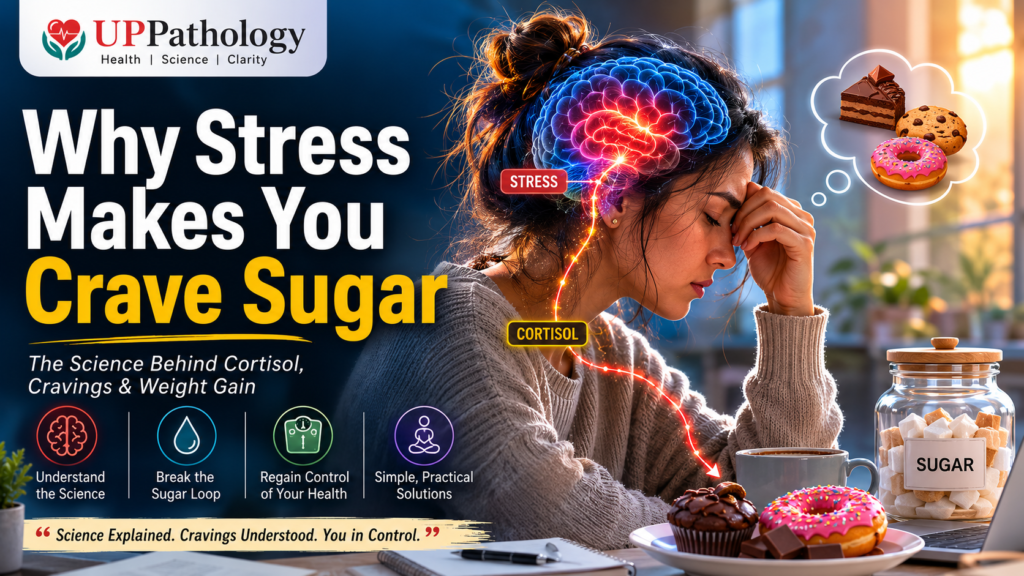
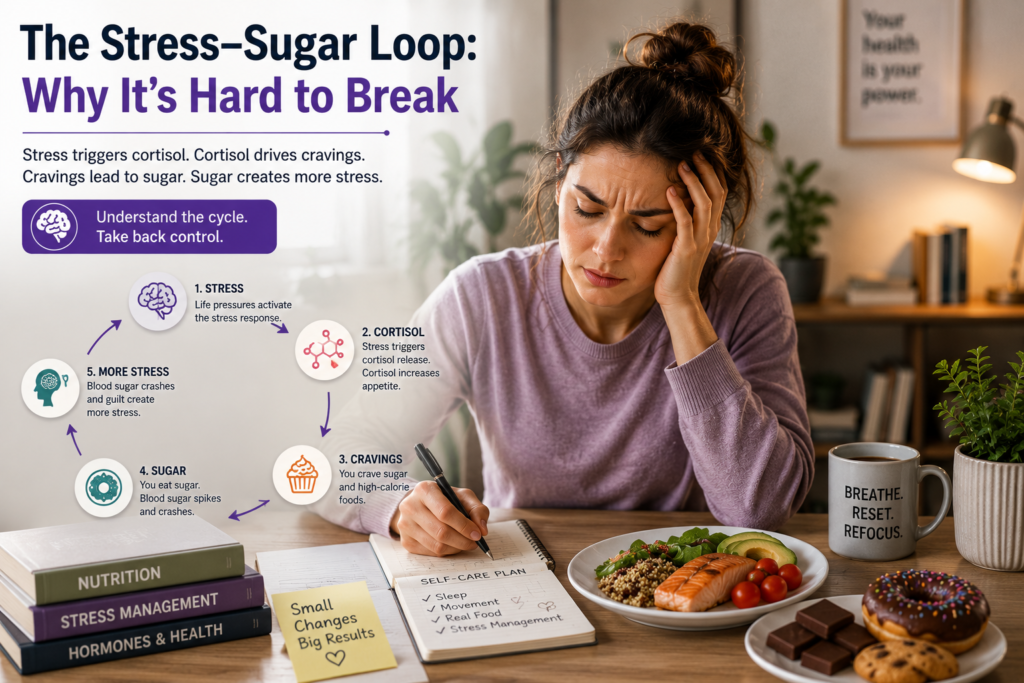
The UPP Stress → Sugar Loop™
Stress
      ↓
Cortisol Rises
      ↓
Brain Wants Quick Energy
      ↓
Sugar Craving
      ↓
Temporary Relief
      ↓
Blood Sugar Crash
      ↓
More Hunger
Educational Note: The UPP Stress → Sugar Loop™ is an educational framework developed by UPPathology to help readers understand common stress-related eating patterns. It is not a medical diagnostic model.
🧠 Psychology Insight
Your body doesn’t know the difference between…
A tiger chasing you…
And a stressful email.
Both can activate your stress response.
Your body prepares for action.
Your brain starts looking for energy.
That’s one reason stressful days often end with stronger cravings.
It isn’t because you’re “weak.”
It’s because your brain is trying to protect you—even if the strategy isn’t always helpful in modern life.
💡 UPP Expert Tip
The next time you crave something sweet, don’t ask:
“How can I stop this craving?”
Instead ask:
“What is causing this craving?”
Sometimes the answer is hunger.
Sometimes it’s stress.
Understanding the trigger is more powerful than fighting the craving.
🔗Looking Beyond Stress Management
If stress regularly affects your eating habits, improving your daily nutrition should always come first. Alongside healthy meals, regular exercise, and better sleep, some people also explore gut health supplements because emerging research suggests the gut microbiome may influence appetite and food cravings. If you’re researching this topic, read our detailed LeanBiome Review (2026) to understand its ingredients, potential benefits, limitations, and the current scientific evidence before making any decision.If stress regularly affects your eating habits, improving your daily nutrition is often the first step. For some people who struggle to meet their protein needs through food alone, a high-quality protein supplement may be a convenient option alongside a balanced diet. We’ll cover how protein supports fullness in our upcoming Protein & Satiety Guide, where we’ll also review evidence-based options.
🧠 Why Cortisol Makes You Crave Sugar During Stress
Imagine your body is like a car.
Normally, it runs smoothly.
Fuel goes in.
Energy comes out.
Everything feels balanced.
Now imagine someone suddenly shouts,
“Emergency!”
Your body reacts instantly.
It doesn’t stop to ask,
“Is this a real danger?”
It simply prepares you to survive.
That’s exactly what happens when you’re under stress.
Your brain sends a signal to release cortisol.
What Does Cortisol Actually Do?
Cortisol is not a “bad” hormone.
In fact, you couldn’t live without it.
It helps your body:
- Wake up in the morning
- Control blood sugar
- Manage inflammation
- Respond to stress
- Keep your brain alert
The problem isn’t cortisol itself.
The problem is too much cortisol for too long.
When stress becomes part of everyday life…
Your body may stay in “survival mode.”
That’s when eating habits often begin to change.
📍Why Does Stress Make Sugar Look So Attractive?
Imagine you’re driving.
Your fuel light suddenly turns on.
What’s the fastest way to keep moving?
You look for the nearest gas station.
Your brain behaves in a similar way.
When stress continues, your brain starts looking for quick energy.
Foods like:
🍫 Chocolate
🍩 Donuts
🍪 Cookies
🥤 Sugary drinks
feel much more appealing because they provide energy quickly.
That’s why stress often changes what you want to eat, not just how much you eat.
🧠 UPP Insight
Your body isn’t saying,
“I need chocolate.”
It’s often saying,
“I need energy… and I need it fast.”
Those are two very different messages.
📍Why Does Sugar Feel Good During Stress?
Have you ever noticed this?
You’re feeling overwhelmed.
You eat something sweet.
For a few minutes…
You feel better.
That’s because tasty foods can activate your brain’s reward system.
For a short time, they may reduce feelings of discomfort.
But here’s the important part.
The stressful situation usually hasn’t changed.
The deadline is still there.
The argument is still there.
The worry is still there.
Food helped you feel different for a moment.
It didn’t solve the problem.
That’s why many people find themselves craving sugar again later.
📍How Stress Eating Becomes a Habit
Let’s look at a simple example.
Day 1
Stress
↓
Chocolate
↓
Feel Better
Day 10
Stress
↓
Chocolate
↓
Feel Better
Day 100
Stress
↓
Brain Automatically Thinks
↓
“Chocolate!”
This is how habits form.
The brain loves shortcuts.
If something seems to work—even for a short time—it remembers it.
The next time stress appears…
The craving appears faster.
Not because you’re weak.
Because your brain is efficient.
🧠 Psychology Insight
Your brain isn’t trying to make you gain weight.
It’s trying to help you survive using the patterns it has learned.
The good news?
Patterns can be changed.
⭐ UPP Signature Tool™
The S.T.O.P. Reset™
The next time a sugar craving suddenly appears…
Don’t fight it.
Pause for one minute.
🟢 S — Stop
Don’t immediately reach for food.
Pause.
Take one slow breath.
🟡 T — Think
Ask yourself:
“Am I physically hungry… or am I feeling stressed?”
Don’t rush the answer.
🔵 O — Observe
Look around.
What happened just before the craving?
Did you:
- Receive bad news?
- Finish a difficult meeting?
- Argue with someone?
- Feel overwhelmed?
- Skip lunch?
Finding the trigger is often more useful than fighting the craving.
🟣 P — Proceed
Now make a conscious choice.
Maybe you still decide to eat.
That’s okay.
The goal isn’t perfection.
The goal is making a decision…
Instead of reacting automatically.
💡 UPP Expert Tip
Next time stress hits…
Try changing your state before your snack.
For example:
- Walk for five minutes.
- Drink water.
- Stretch your body.
- Take ten slow breaths.
- Step outside for fresh air.
Sometimes the craving becomes much smaller.
Not because you used more willpower…
Because you reduced the stress signal.
🔗 Supporting Healthy Blood Sugar
Ongoing stress may also affect blood sugar regulation in some people, which can make energy crashes and sugar cravings feel stronger. Lifestyle changes should always come first, but if you’re exploring nutrition-based approaches for healthy blood sugar support, read our in-depth GlucoTrust Bite Review where we examine the ingredients, available evidence, and who it may or may not be suitable for.
If you’ve ever wondered why cortisol makes you crave sugar even when you’re not physically hungry, the answer usually involves the interaction between stress hormones, appetite regulation, and your brain’s reward system.
✅ 10 Science-Backed Ways to Reduce Stress-Related Sugar Cravings
You don’t have to eliminate stress from your life.
That’s impossible.
The goal is to stop stress from controlling your food choices.
Here are 10 practical strategies that can help.
1. Eat Protein at Every Main Meal
When you’re stressed, your brain often looks for quick energy.
Protein helps you stay full for longer and can make it easier to manage hunger between meals.
Good options include:
- Eggs
- Greek yogurt
- Chicken
- Fish
- Lentils
- Beans
- Tofu
Think of protein as helping your body stay steady instead of constantly chasing quick energy.
💰 Additional Nutritional Support
Frequent sugar cravings don’t always mean your body needs sugar. Sometimes they’re influenced by stress, eating habits, or blood sugar fluctuations. If you’re interested in products designed to support healthy blood sugar alongside a balanced lifestyle, our Gluco6 Review explains how it works, what ingredients it contains, and whether it’s worth considering based on current evidence.
2. Choose Fiber-Rich Foods
Fiber slows digestion and helps you feel satisfied for longer.
Examples include:
- Oats
- Apples
- Vegetables
- Beans
- Whole grains
- Chia seeds
A fiber-rich meal is less likely to leave you searching for sweets an hour later.
Understanding Appetite Regulation
Managing cravings isn’t just about eating less—it’s about understanding how your body regulates appetite. Factors such as gut health and appetite hormones like GLP-1 may play a role. To learn more, explore our guide on How to Boost GLP-1 Naturally and our evidence-based LeanBiome Review (2026) to see how lifestyle strategies and supplements can fit into a broader weight management plan.
3. Sleep Like It Matters
Poor sleep and stress often work together.
After a bad night’s sleep, many people notice:
- More hunger
- More sugar cravings
- Lower energy
- Less patience
Improving sleep may also make it easier to manage cravings the next day.
4. Move Your Body
Exercise isn’t only for burning calories.
It also helps many people feel calmer and more energized.
Even a 20-minute walk can become a healthy way to respond to stress instead of automatically reaching for snacks.
5. Don’t Keep Temptation in Front of You
If cookies are sitting on the kitchen counter…
You’ll notice them every time you walk past.
Try making healthy foods the easiest foods to reach.
Your environment often influences your choices more than willpower.
6. Slow Down Before Eating
Stress makes people rush.
Instead…
Pause.
Take three slow breaths.
Drink a glass of water.
Then decide whether you’re truly hungry.
That short pause can completely change your next decision.
7. Learn Your Biggest Stress Triggers
Ask yourself:
When do sugar cravings appear most often?
- After work?
- During exams?
- Late at night?
- After arguments?
- While working on deadlines?
Patterns reveal opportunities for change.
8. Build a “Stress Toolbox”
Food shouldn’t be your only coping tool.
Create a list of alternatives.
Examples:
- Walking
- Deep breathing
- Stretching
- Calling a friend
- Listening to music
- Journaling
- Reading
The more options you have…
The less pressure food has to solve every problem.
9. Stop Chasing Perfection
Many people think,
“I already ate one cookie…”
“So today is ruined.”
It isn’t.
One snack doesn’t ruin healthy habits.
One choice doesn’t define your progress.
Your next decision always matters more than your last one.
10. Practice the UPP S.T.O.P. Reset™
Remember…
Stress appears.
↓
Pause.
↓
Think.
↓
Observe.
↓
Proceed.
The more often you practice it…
The easier it becomes.
📊 Myth vs Fact
| ❌ Myth | ✅ Fact |
|---|---|
| Cortisol is a bad hormone. | Cortisol is essential for life. Problems usually arise when stress stays high for long periods. |
| Sugar cravings always mean you need sugar. | Cravings can also be influenced by stress, habits, emotions, and your environment. |
| Strong willpower is the only way to stop stress eating. | Understanding triggers, building healthier routines, and planning ahead are usually more effective than relying on willpower alone. |
🎯 The 7-Day Stress Awareness Challenge™
For the next seven days…
Every time you crave something sweet…
Write down:
✅ Time
✅ Stress level (1–10)
✅ What happened just before the craving?
✅ What did you eat?
✅ How did you feel 20 minutes later?
By the end of the week…
You may discover patterns you never noticed before.
Awareness creates change.
❓ Frequently Asked Questions
Does cortisol always make you crave sugar?
Not always.
People respond to stress differently. However, ongoing stress can make high-sugar or high-calorie foods feel more appealing for many individuals.
Can lowering stress reduce cravings?
It can help.
Reducing stress may lower the urge to seek comfort through food, although other factors such as sleep, meal quality, and daily habits also play important roles.
Why do I crave sweets after work?
Work can be mentally exhausting.
After a stressful day, your brain may seek quick comfort or energy, making sugary foods seem especially attractive.
Is stress eating the same as emotional eating?
Not exactly.
Stress eating is one type of emotional eating.
People may also eat because of boredom, loneliness, sadness, or celebration.
Why does cortisol make you crave sugar?
When stress raises cortisol levels for extended periods, your brain may seek quick sources of energy. This is one reason why cortisol makes you crave sugar, especially during emotionally demanding situations.
📌 Key Takeaways
✔ Cortisol is a normal stress hormone that helps your body respond to challenges.
✔ Long-term stress can make sugary foods feel more tempting.
✔ Cravings are often influenced by stress, habits, and your environment—not just hunger.
✔ The UPP Stress → Sugar Loop™ explains how stress-related cravings can become a repeating pattern.
✔ The UPP S.T.O.P. Reset™ helps you pause before reacting automatically.
✔ Small daily habits often have a bigger impact than relying on willpower alone.
📚 Continue Your Learning Journey
← Previous Guide
How to Stop Emotional Eating Naturally: 10 Science-Backed Strategies That Actually Work
Recommended Reading
- Physical Hunger vs Emotional Hunger vs Psychological Hunger
- Why Can’t I Stop Thinking About Food?
- How to Boost GLP-1 Naturally
📚 Trusted Sources
- Harvard Nutrition Source
- https://nutritionsource.hsph.harvard.edu/
- NIDDK
- https://www.niddk.nih.gov/
- NIH
- https://www.nih.gov/
- American Psychological Association
- https://www.apa.org/
- CDC – Stress
- https://www.cdc.gov/
⚠ Medical Disclaimer
This article is for educational purposes only and should not replace professional medical advice, diagnosis, or treatment. If you experience persistent stress, frequent overeating, unexplained weight changes, or symptoms that interfere with daily life, seek advice from a qualified healthcare professional.
🌱 Final Thought
Imagine your smoke alarm goes off while you’re cooking.
The alarm isn’t the problem.
It’s trying to protect you.
Stress works in a similar way.
Your body isn’t trying to make life harder.
It’s trying to keep you safe.
Sometimes it does that by making quick-energy foods seem more attractive.
Instead of asking,
“Why do I have no self-control?”
Try asking,
“What is my stress trying to tell me?”
Understanding the message behind the craving is often more powerful than fighting the craving itself. Now that you understand why cortisol makes you crave sugar, you can focus on managing stress, improving nutrition, and building healthier habits instead of blaming yourself for every craving.