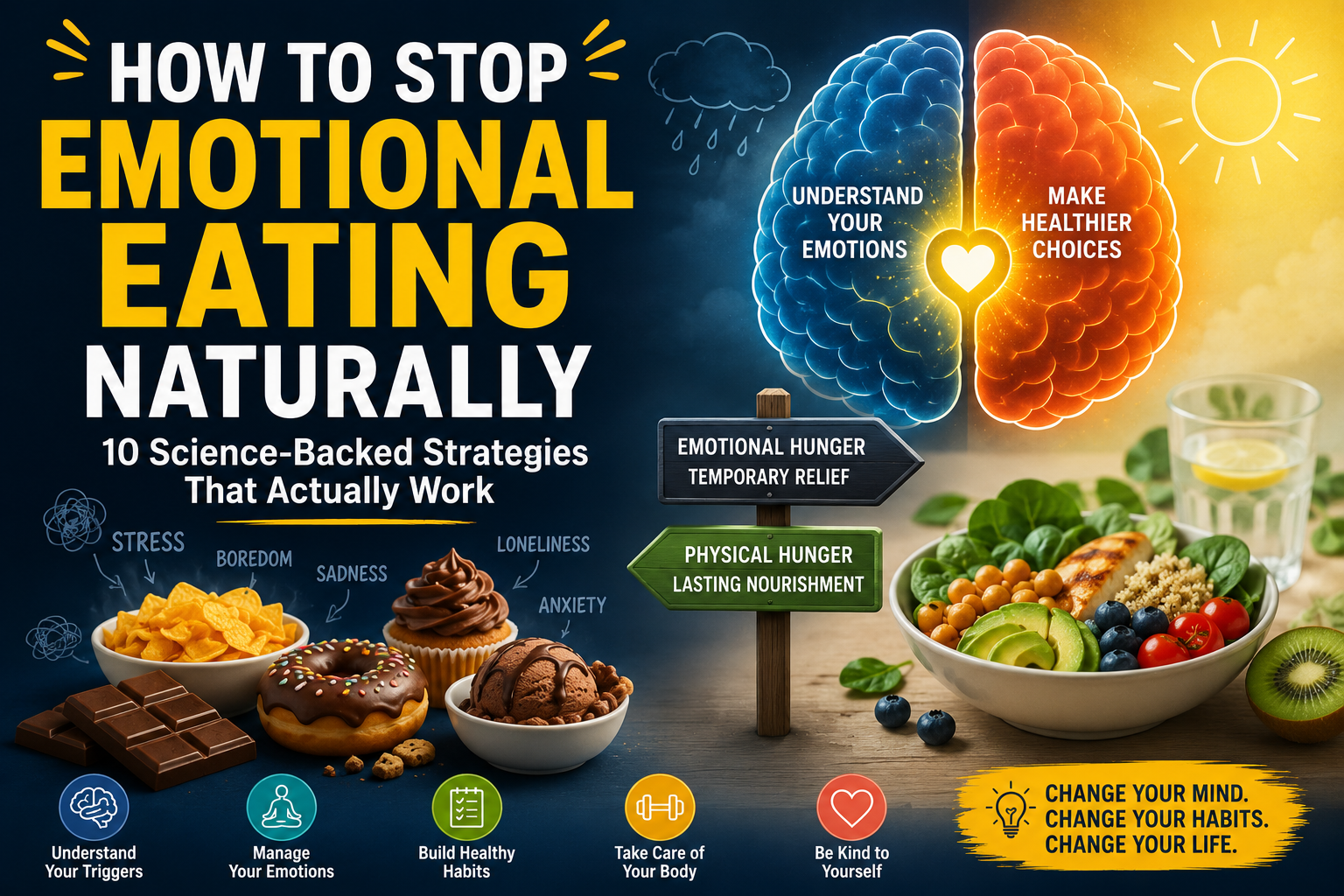
Learn how to stop emotional eating naturally with 10 science-backed strategies. Understand emotional hunger, food cravings, stress eating, and build healthier eating habits.
Thank you for reading this post, don't forget to subscribe!🌟 Psychology Hook
Imagine this.
You had a stressful day.
Your boss criticized your work.
You argued with someone you love.
Or maybe…
You just feel lonely.
Your stomach isn’t growling.
You ate dinner an hour ago.
But suddenly…
You want chocolate.
Ice cream.
Pizza.
Or a bag of chips.
You open the kitchen cabinet.
Not because you’re hungry.
Because you want to feel better.
Here’s the surprising part…
Food didn’t create the emotion.
And food usually can’t solve it.
If this sounds familiar…
You’re not weak.
You’re probably experiencing emotional eating.
The good news?
It can be changed.
⚡ Quick Answer
If you’re trying to learn how to stop emotional eating naturally, the first step is understanding why emotional eating happens.
People often eat when they feel stressed, anxious, lonely, bored, angry, or even happy.
Food may provide temporary comfort, but it rarely solves the emotion that caused the craving.
Learning to recognize emotional triggers is one of the most effective ways to reduce emotional eating naturally.
📖 Quick Definition
What Is Emotional Eating?
Emotional eating is the habit of using food to manage emotions instead of satisfying physical hunger.
Instead of asking,
“Does my body need energy?”
your brain asks,
“What can make me feel better right now?”
That small difference changes everything. Understanding this difference is essential if you want how to stop emotional eating naturally.
📌 In This Guide You’ll Learn
By the end of this guide, you’ll know:
- Why emotions can create food cravings
- How emotional hunger is different from physical hunger
- Why willpower alone often doesn’t work
- 10 practical strategies to stop emotional eating naturally
- A simple method you can use the next time a craving appears
🧠 The Biggest Myth About Emotional Eating
Many people believe this:
“I just don’t have enough self-control.”
But that’s usually not true.
Imagine your phone battery is almost empty.
It becomes slow.
It struggles to work.
Your brain can feel similar after a long, stressful day.
When you’re mentally exhausted, it naturally looks for something that feels safe, familiar, and rewarding.
Food is one of the easiest options.
So emotional eating isn’t always a lack of discipline.
It’s often your brain trying to protect you in the quickest way it knows.
⭐ UPP Original Framework™
The Emotion → Action Map™
Emotion
     ↓
Brain Wants Relief
     ↓
Food Feels Like Comfort
     ↓
You Eat
     ↓
Temporary Relief
     ↓
Emotion Returns
Why This Matters
Most people try to stop eating.
Very few try to understand what happened before the eating started.
If you can identify the emotion…
You can change the action.
🧠 Psychology Insight
Your stomach asks for food.
Your emotions ask for comfort.
They are not the same thing.
Learning to tell them apart is one of the most powerful skills for lifelong healthy eating.
📍Why Do We Eat Our Feelings?
Think about the last time you were stressed.
Did you crave…
🥜 Almonds?
🥗 Salad?
🥦 Broccoli?
Probably not.
Most people crave foods like:
- Chocolate 🍫
- Ice cream 🍦
- Pizza 🍕
- Chips 🍟
- Cookies 🍪
Why?
Because these foods don’t just fill your stomach.
They activate your brain’s reward system.
For a few minutes, they make you feel better.
But here’s the catch…
The emotion is still there.
Once the food is gone…
The stress, sadness, or loneliness often comes back.
That’s why emotional eating can become a cycle.
📍How Emotional Hunger Is Different from Physical Hunger
This is one of the most important things you’ll ever learn.
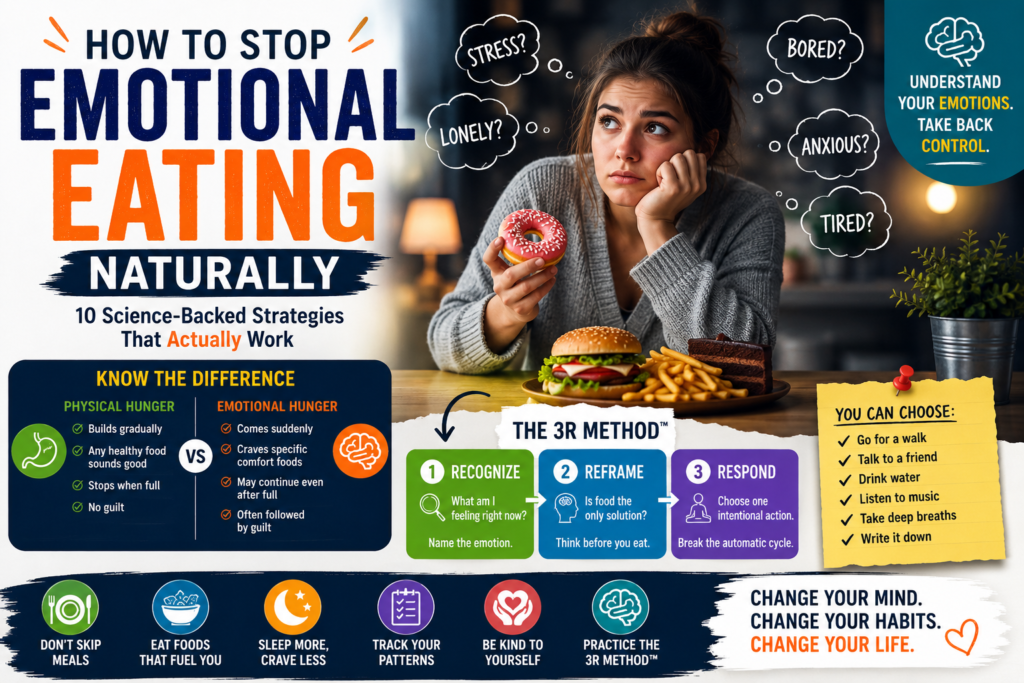
| Physical Hunger | Emotional Hunger |
|---|---|
| Builds slowly | Appears suddenly |
| Any balanced meal sounds good | Only comfort foods sound good |
| Stops when you’re full | May continue even after you’re full |
| Doesn’t cause guilt | Often followed by guilt or regret |
| Comes from your body | Comes from your emotions |
🧠 UPP Insight
Ask yourself:
“Would I happily eat grilled chicken, dal, fruit, or vegetables right now?”
If the answer is yes, you may be physically hungry.
If the answer is,
“No… I only want chocolate.”
Your brain may be looking for comfort instead of calories.
📍Why Willpower Alone Doesn’t Work
Many people think:
“Next time I’ll just be stronger.”
But emotional eating isn’t a test of character.
Imagine trying to stop a sneeze.
You can fight it for a few seconds…
But eventually your body wins.
Emotional cravings can feel similar.
The goal isn’t to fight your brain.
The goal is to understand it.
Once you know what triggered the craving, making a different choice becomes much easier.
⭐ UPP Signature Tool™
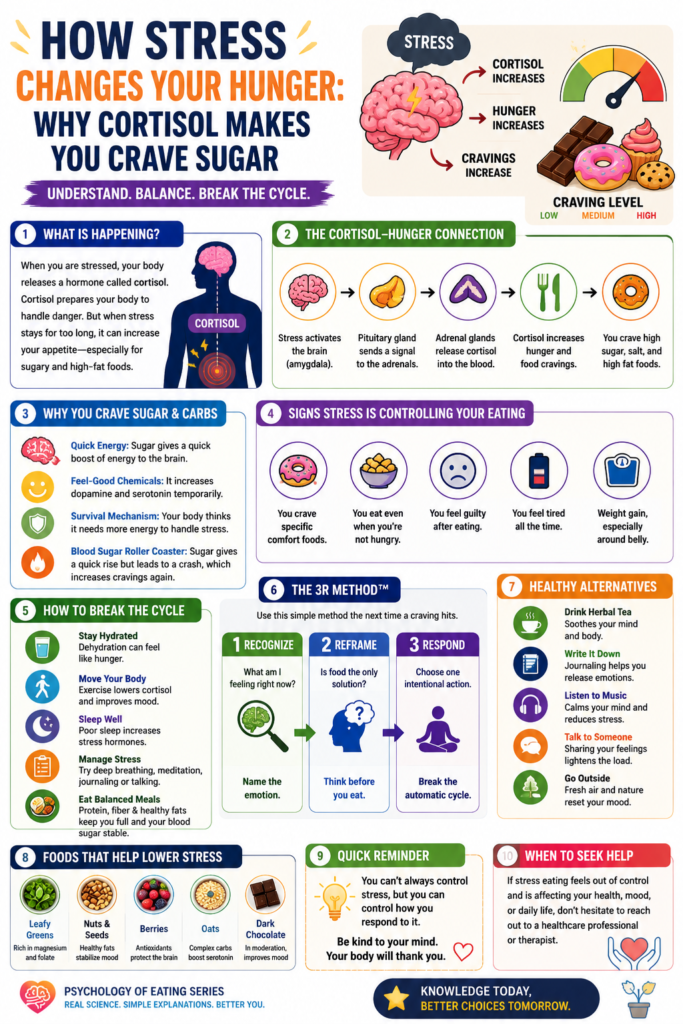
The 3R Method™
The next time you feel an emotional craving…
Don’t rush to the kitchen.
Take one minute and follow these three steps.
① Recognize
Ask yourself:
“What am I feeling right now?”
Stress?
Loneliness?
Anger?
Boredom?
Disappointment?
Name the emotion.
Research shows that simply identifying an emotion can make it feel more manageable.
② Reframe
Now ask:
“Will food solve this problem… or only distract me from it?”
Be honest.
Sometimes the answer is obvious.
③ Respond
Instead of eating automatically…
Choose one helpful action.
For example:
- Drink a glass of water.
- Walk outside for 10 minutes.
- Text a friend.
- Listen to calming music.
- Write your thoughts in a notebook.
- Take five slow breaths.
You don’t have to be perfect.
You just have to interrupt the automatic pattern.
🧠 What Your Brain Is Actually Asking For
When emotional eating begins…
Your brain may not be asking for food at all.
It could be asking for something completely different.
| Your Brain Says | What It May Actually Need |
|---|---|
| “I need chocolate.” | Comfort |
| “Let’s order pizza.” | Stress relief |
| “I want ice cream.” | Emotional soothing |
| “I need snacks.” | A mental break |
| “Let’s eat.” | Human connection |
This small shift changes everything.
Instead of asking,
“What should I eat?”
Ask,
“What do I really need?”
Sometimes the answer isn’t food.
It’s rest.
A conversation.
A hug.
A walk.
Or simply giving yourself permission to feel your emotions without trying to eat them away.
💡 UPP Expert Tip
Emotions are not enemies.
They’re messages.
Food may quiet the message for a few minutes.
Understanding the message helps you solve the real problem.
The following strategies can help you how to stop emotional eating naturally without relying on extreme diets or guilt.
✅ 10 Science-Backed Ways to Stop Emotional Eating Naturally
You don’t have to stop emotional eating overnight.
Small changes, repeated consistently, create lasting habits.
Here are 10 practical strategies that really help.
1. Learn to Name Your Emotion
Before eating, pause for a moment and ask:
“What am I feeling right now?”
You might say:
- I’m stressed.
- I’m lonely.
- I’m frustrated.
- I’m anxious.
- I’m disappointed.
Giving your emotion a name helps your brain understand what’s happening instead of reacting automatically.
2. Don’t Skip Meals
Many people skip breakfast or lunch.
By evening, they’re physically hungry and emotionally exhausted.
That combination makes emotional eating much more likely.
Try to eat balanced meals throughout the day.
3. Build Meals That Keep You Full
Meals rich in protein and fiber help you stay satisfied longer.
Instead of focusing only on eating less…
Focus on eating smarter.
Examples include:
- Eggs
- Greek yogurt
- Lentils
- Beans
- Chicken
- Fish
- Vegetables
- Fruits
- Whole grains
4. Find Another Way to Feel Better
Food isn’t the only source of comfort.
Create your own Comfort List.
It could include:
- Listening to your favorite music
- Walking outside
- Talking to someone you trust
- Reading a book
- Stretching
- Deep breathing
- Journaling
The goal isn’t to remove comfort.
The goal is to expand where comfort comes from.
5. Sleep More, Crave Less
Poor sleep doesn’t just make you tired.
It can also make emotional cravings feel stronger.
Aim for a regular sleep schedule whenever possible.
Even small improvements in sleep quality can support healthier eating habits.
6. Keep Trigger Foods Out of Sight
If cookies are sitting on the kitchen counter…
Your brain notices them all day.
Store tempting foods out of immediate view.
Make healthy choices the easiest choices.
7. Slow Down Before You Eat
When a craving appears…
Pause.
Take five slow breaths.
Drink a glass of water.
Then decide.
Sometimes that short pause is enough to break the automatic habit.
8. Stop Feeling Guilty
Many people say,
“I failed again.”
But guilt often creates more stress.
More stress can create more emotional eating.
Instead, say:
“I’m learning a new skill.”
Progress is more important than perfection.
9. Look for Patterns
Keep a simple note for one week.
Write down:
- Time
- Emotion
- Food
- Situation
You may discover that most emotional eating happens:
- After work
- Late at night
- After arguments
- When you’re alone
Patterns are easier to change than surprises.
10.Practice the 3R Method How to Stop Emotional Eating Naturally
Remember:
Recognize
↓
Reframe
↓
Respond
Every time you interrupt the cycle…
You make the next craving a little easier to manage.
📊 Myth vs Fact
| ❌ Myth | ✅ Fact |
|---|---|
| Emotional eating means you’re weak. | Emotional eating is a common human behavior influenced by emotions, habits, and your environment. |
| You need perfect willpower to stop emotional eating. | Awareness, planning, and healthier coping strategies are usually more effective than willpower alone. |
| Comfort food fixes emotional problems. | It may provide temporary relief, but it rarely addresses the underlying emotion. |
🎯 The 7-Day Emotion Awareness Challenge™
For the next seven days…
Every time you feel like eating between meals…
Ask yourself these three questions.
Question 1
What am I feeling right now?
Question 2
Would I happily eat a balanced meal right now?
Question 3
What does my brain actually need?
Write the answers down.
Don’t judge yourself.
Just observe.
Awareness is the first step toward change.
❓ Frequently Asked Questions
Can emotional eating ever be normal?
Yes.
Most people occasionally eat because they’re celebrating, feeling stressed, or seeking comfort.
It becomes a concern when it happens frequently, feels difficult to control, or causes distress.
Why do I crave sweets when I’m stressed?
Stress can increase the desire for foods that feel rewarding and comforting.
That’s one reason many people reach for chocolate, cookies, or ice cream during difficult times.
Can emotional eating lead to weight gain?
It can contribute if it regularly leads to eating more energy than your body needs over time.
Long-term patterns matter more than occasional treats.
Should I completely avoid comfort foods?
Not necessarily.
The goal isn’t to fear food.
The goal is to make intentional choices instead of automatic ones.
📌 Key Takeaways
✔ Emotional eating is about emotions—not just hunger.
✔ Food can provide temporary comfort, but it rarely solves emotional problems.
✔ Understanding your emotional triggers is more helpful than blaming yourself.
✔ The UPP Emotion → Action Map™ helps explain why emotional eating happens.
✔ The UPP 3R Method™ gives you a simple way to pause before reacting.
✔ Small daily changes can build healthier eating habits over time.
📚 Continue Your Learning Journey
← Previous Guide
Why Do I Eat When I’m Bored? The Science Behind Boredom Eating & Mindless Snacking
Recommended Reading
- Physical Hunger vs Emotional Hunger vs Psychological Hunger
- Why Can’t I Stop Thinking About Food?
- Why Am I Hungry Right After Eating?
- Why Do I Eat When I’m Bored?
- How to Boost GLP-1 Naturally
📚 Trusted Sources
1. Harvard T.H. Chan School of Public Health – Nutrition Source
2. National Institute of Diabetes and Digestive and Kidney Diseases (NIDDK)
3. National Institutes of Health (NIH)
4. American Psychological Association (APA)
5. Centers for Disease Control and Prevention (CDC)
⚠ Medical Disclaimer
This article is for educational purposes only and should not replace professional medical advice, diagnosis, or treatment. If emotional eating is frequent, causes significant distress, or is associated with symptoms of an eating disorder, anxiety, or depression, consult a qualified healthcare professional.
🌱 Final Thought
Imagine your emotions are like the warning lights on a car dashboard.
If a warning light turns on…
You wouldn’t cover it with tape.
You’d look for the real reason.
Emotional eating works the same way.
Food may quiet the feeling for a little while.
But understanding the feeling helps you solve the real problem.
Your stomach asks for food.
Your emotions ask to be heard.
Learning the difference isn’t about becoming perfect.
It’s about becoming more aware, more compassionate toward yourself, and making one better choice at a time.