Category: Metabolic Health & Weight Loss
Author: Drx. Prashant Kumar
Updated: 2026
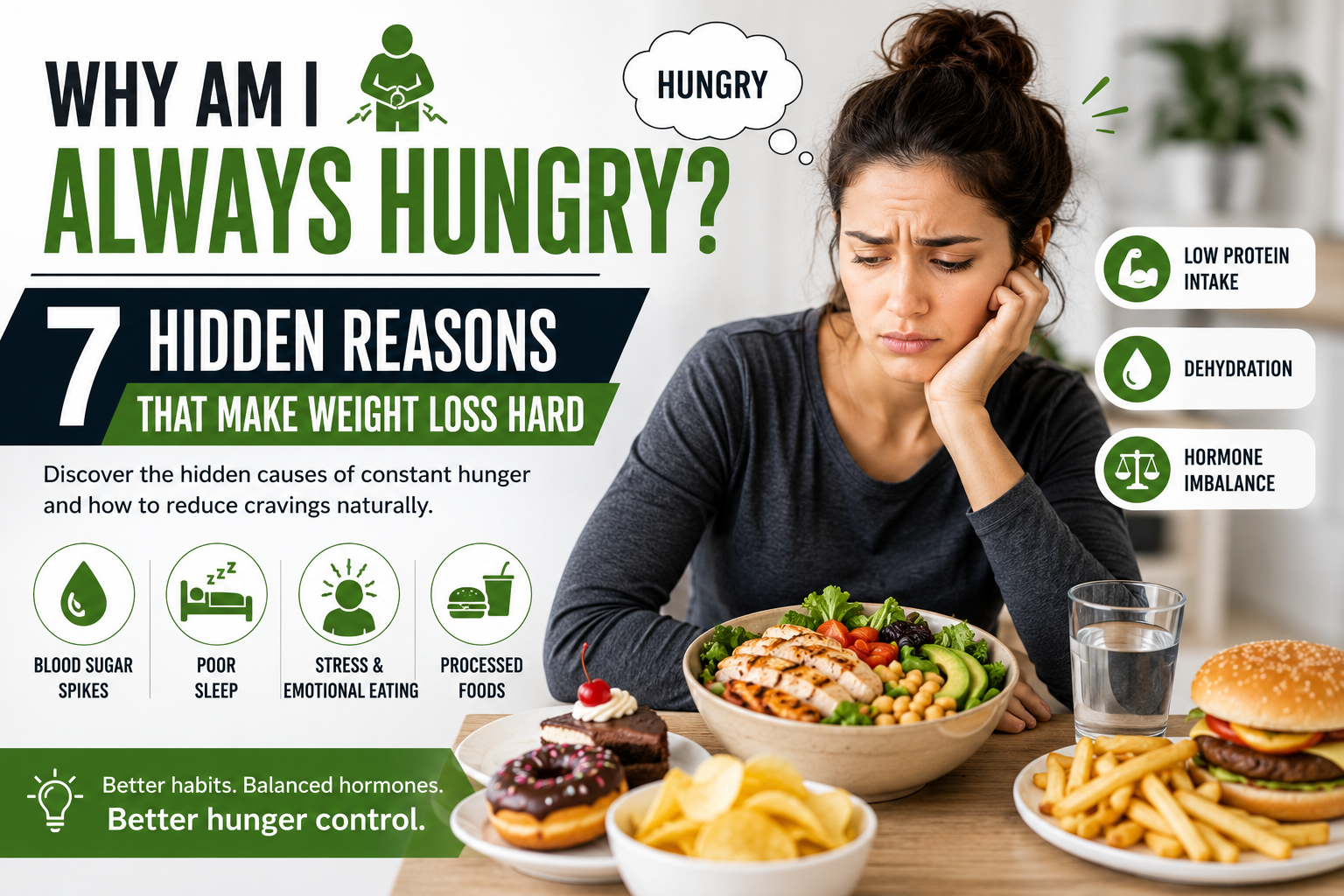
Why am I always hungry even after eating? Discover 7 hidden causes of constant hunger and practical ways to reduce cravings naturall
🔥 Introduction
Do you feel hungry even after eating a full meal?
You’re not alone. Constant hunger is one of the biggest reasons people struggle with:
- overeating
- cravings
- emotional eating
- weight gain
Many people assume hunger is simply about “not eating enough,” but the reality is more complex.
👉 Hormones, blood sugar balance, food quality, sleep, stress, hydration, and eating habits all influence appetite.
Many people searching for answers to “why am I always hungry” are actually dealing with appetite imbalance, poor food quality, or unstable blood sugar levels without realizing it.
If you’re wondering:
👉 “Why am I always hungry?”
This guide explains the hidden causes of constant hunger and practical ways to improve appetite control naturally.
⚡ Quick Answer
👉 You may feel hungry all the time due to low protein intake, blood sugar spikes, poor sleep, dehydration, stress, processed foods, or hormonal imbalance. Improving food quality and lifestyle habits can help reduce constant hunger naturally.
🧠 Why Am I Always Hungry Even After Eating?
Hunger is not just about an empty stomach.
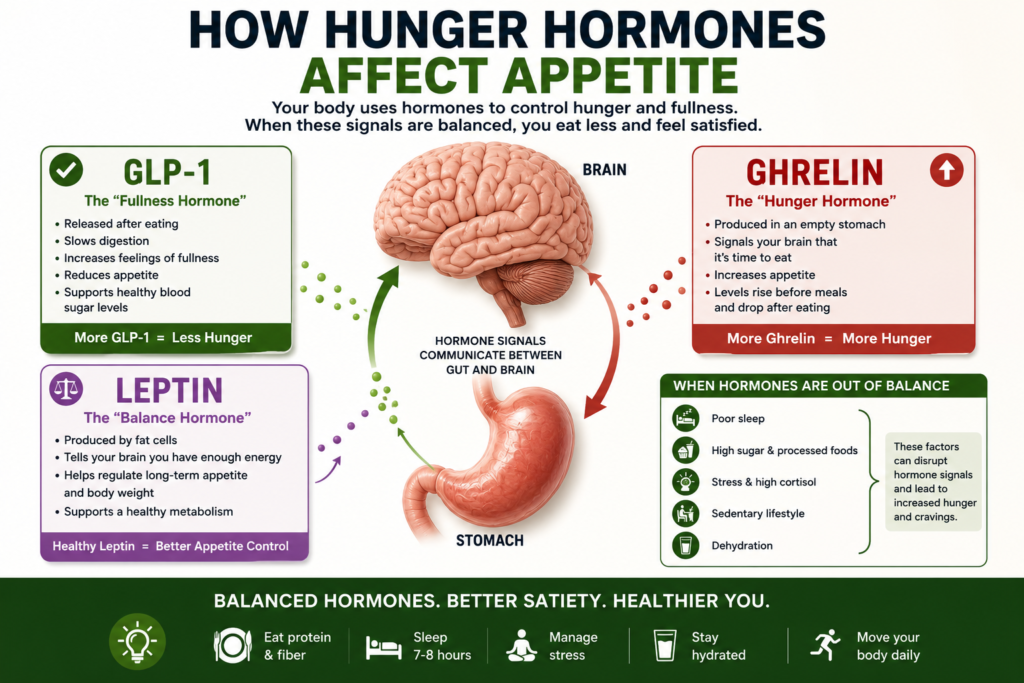
Your body uses several hormones to regulate appetite and fullness, including:
- GLP-1
- ghrelin
- leptin
These hormones communicate with your brain to help control when you feel hungry and when you feel satisfied.
👉 When these signals become disrupted, you may feel hungry more often—even shortly after eating.
🧠 How Hunger Hormones Affect Appetite
Hormones such as GLP-1, ghrelin, and leptin play an important role in appetite regulation.
- GLP-1 helps increase feelings of fullness
- Ghrelin signals hunger
- Leptin helps regulate long-term energy balance
Poor sleep, processed foods, stress, and blood sugar instability may interfere with these signals, making it harder to feel satisfied after meals.
🚨 7 Hidden Reasons You’re Always Hungry
🥇 1. You’re Not Eating Enough Protein
Protein helps slow digestion and improve satiety.
Without enough protein:
❌ hunger increases
❌ cravings become stronger
❌ overeating becomes easier
✅ Better Protein Choices
- eggs
- Greek yogurt
- lentils
- chicken or fish
- nuts and seeds
- cottage cheese
Protein-rich meals often help people stay full longer compared to highly processed carbohydrate-heavy meals.
🥈 2. Blood Sugar Spikes and Crashes
Sugary foods and refined carbohydrates can quickly increase blood sugar.
But after the spike comes a rapid drop.
👉 This may trigger:
- sudden hunger
- low energy
- sugar cravings
- irritability
If you constantly wonder why am I always hungry after eating sugary meals, blood sugar crashes may be one of the biggest reasons.
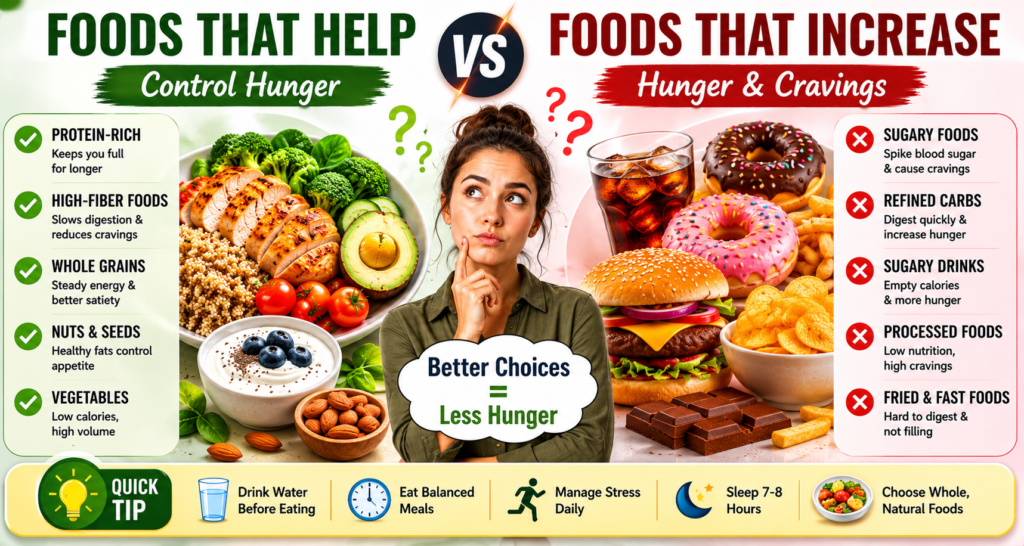
📊 Foods That Help vs Foods That Trigger Hunger
| ✅ Foods That Help Control Hunger | ❌ Foods That Increase Hunger |
|---|---|
| Protein-rich meals | Sugary snacks |
| High-fiber foods | Soft drinks |
| Whole grains | White bread |
| Nuts & seeds | Processed junk food |
| Vegetables | Packaged desserts |
🥉 3. Poor Sleep Disrupts Hunger Hormones
Sleep affects many appetite-related hormones.
Poor sleep may:
- increase cravings
- reduce fullness signals
- increase emotional eating
- worsen appetite control
👉 Even one night of poor sleep can affect food choices and hunger levels the next day.
🏅 4. You’re Eating Too Many Processed Foods
Ultra-processed foods are often designed to be highly rewarding but not very filling.
These foods may:
✔ digest quickly
✔ increase cravings
✔ reduce satiety
✔ encourage overeating
Examples include:
- chips
- sugary cereals
- packaged desserts
- fast food
- processed snack foods
🎯 5. Stress and Emotional Eating
Stress increases cortisol, a hormone that may influence appetite and cravings.
Many people eat not because they are physically hungry, but because they are:
- stressed
- anxious
- emotionally exhausted
- bored
Emotional eating can create a cycle of temporary comfort followed by more cravings later.
💧 6. You May Actually Be Dehydrated
Sometimes thirst feels very similar to hunger.
Mild dehydration may increase:
- fatigue
- cravings
- appetite confusion
- headaches
Before reaching for a snack:
👉 Try drinking water first and waiting a few minutes.
⚖️ 7. Your Hunger Hormones May Be Unbalanced
Hormones such as GLP-1 help regulate appetite naturally.
When satiety signaling becomes weaker, people may experience:
- constant hunger
- difficulty staying full
- frequent cravings
- overeating
This is one reason why food quality often matters more than extreme calorie restriction.
📊 Hunger Symptom vs Possible Cause
| Symptom | Possible Cause |
|---|---|
| Hungry after meals | Low protein intake |
| Sugar cravings | Blood sugar crash |
| Night hunger | Poor meal timing |
| Constant snacking | Processed foods |
| Emotional eating | Stress & cortisol |
| Hunger with fatigue | Poor sleep or dehydration |
⚠️ Common Mistakes That Make Hunger Worse
Many people accidentally increase hunger by:
- skipping meals
- eating too little protein
- relying on sugary snacks
- sleeping poorly
- drinking calories instead of water
- following extreme diets
Small lifestyle changes often improve appetite control more effectively than aggressive dieting.
🧠 How to Reduce Constant Hunger Naturally
Instead of simply trying to “eat less,” focus on improving appetite regulation naturally.
Helpful strategies include:
✔ protein-rich meals
✔ fiber-rich foods
✔ healthy fats
✔ better sleep
✔ hydration
✔ regular meal timing
✔ stress management
Understanding why am I always hungry is the first step toward improving appetite control and building healthier eating habits long-term.
🍽️ Simple Daily Hunger-Control Habits
| ✅ Helpful Habits | ❌ Habits That Make Hunger Worse |
|---|---|
| Eat balanced meals | Skip meals |
| Sleep 7–8 hours | Late-night snacking |
| Drink enough water | Sugary drinks |
| Include protein | Low-protein diets |
| Eat whole foods | Ultra-processed foods |
💡 Lifestyle Support Matters Too
Alongside balanced nutrition, some people also explore additional wellness strategies focused on appetite regulation and blood sugar support.
However, supplements work best when combined with:
- healthy eating habits
- hydration
- sleep
- movement
- long-term consistency
🚨 When Constant Hunger May Need Medical Attention
Sometimes excessive hunger may be linked to underlying health conditions such as:
- diabetes
- thyroid imbalance
- medication side effects
- metabolic disorders
Consider speaking with a healthcare professional if hunger is accompanied by:
- rapid unexplained weight changes
- excessive thirst
- unusual fatigue
- dizziness
- frequent urination
💡 Lifestyle Support Matters Too
Alongside balanced nutrition, some people also explore additional wellness strategies focused on appetite regulation and blood sugar support. However, supplements work best when combined with consistent eating habits, sleep, hydration, and physical activity.
🔗 Related Guides
👉 GLP-1 Diet Plan for Beginners
👉 How to Boost GLP-1 Naturally
👉 What to Eat at Night to Stop Hunger
👉 Healthy Snacks That Stop Cravings
Why do I feel hungry all the time even after eating?
This may happen due to low protein intake, blood sugar instability, stress, poor sleep, dehydration, or appetite hormone imbalance.
Can poor sleep increase hunger?
Yes. Poor sleep may disrupt appetite hormones and increase cravings and emotional eating.
What foods help reduce hunger naturally?
Protein-rich foods, fiber-rich meals, nuts, seeds, vegetables, and balanced whole-food meals may improve satiety.
Does dehydration affect appetite?
Yes. Mild dehydration may sometimes feel similar to hunger and increase cravings.
Why Am I Always Hungry Throughout the Day?
People who feel hungry throughout the day may benefit from focusing on protein intake, balanced meals, hydration, sleep quality, and reducing processed foods that increase cravings.
🧠 Final Thoughts
Constant hunger is not always a lack of discipline — in many cases, it’s your body responding to poor sleep, stress, blood sugar instability, dehydration, or unbalanced nutrition.
Instead of focusing only on eating less, focus on improving food quality, appetite regulation, and sustainable daily habits. Long-term hunger control usually comes from consistency, not extreme restriction.
🔒 Medical Disclaimer
This content is for educational purposes only and should not replace professional medical advice, diagnosis, or treatment.