Author: Drx. Prashant Kumar
Category: Metabolic Health & Weight Loss
Updated: 2026
Why do I crave sugar when I’m stressed? Discover 7 shocking reasons behind stress eating and learn science-backed ways to control cravings naturally.
Quick Answer
If you crave sugar when you’re stressed, it’s not simply a lack of willpower. Stress triggers hormonal and neurological changes that can increase cravings for sweet, high-calorie foods. Cortisol, blood sugar fluctuations, emotional coping behaviors, sleep disruption, and reward pathways in the brain all play a role in stress eating.
Understanding why stress triggers sugar cravings can help you regain control and build healthier eating habits.
Why Do I Crave Sugar When I’m Stressed?
Have you ever had a stressful day and suddenly found yourself reaching for chocolate, cookies, ice cream, or sugary snacks?
You’re not alone.
Many people notice that when life becomes stressful, cravings for sweet foods seem almost impossible to ignore.
The surprising truth is that stress eating is not simply a discipline problem.
In many cases, your brain and body are actively pushing you toward sugar.
From an evolutionary perspective, stress signals potential danger. Your body responds by preparing for survival, often increasing the desire for quick energy sources.
Unfortunately, in today’s world, that “quick energy” usually comes from processed sugary foods.
The question “why do I crave sugar when I’m stressed” has become increasingly common as modern lifestyles expose people to chronic stress, poor sleep, and highly processed foods. Understanding the science behind stress eating can help explain why these cravings happen and how to manage them effectively.
The Psychology of Stress Eating
Before discussing the causes, it’s important to understand something:
Stress eating is often emotional, not physical.
Physical hunger develops gradually and can be satisfied by almost any nutritious meal.
Emotional hunger usually:
- Appears suddenly
- Creates intense cravings
- Targets specific foods
- Continues even after eating
This distinction explains why someone may eat a full dinner and still want dessert immediately afterward.
The craving is often coming from the brain, not the stomach.
The Science Behind Stress and Sugar Cravings
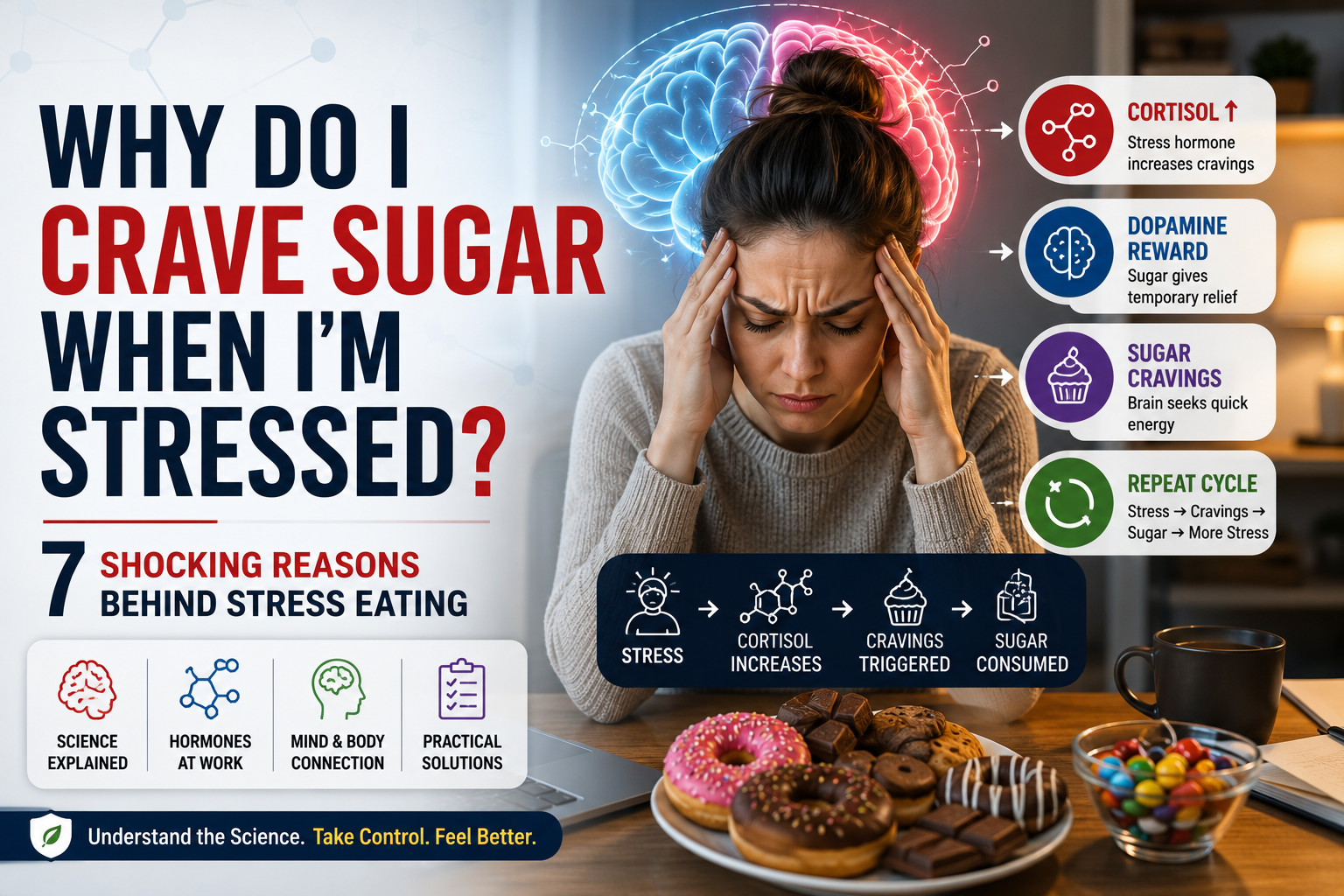
Several systems work together when stress levels increase:
Cortisol
Often called the “stress hormone.”
Dopamine
The brain’s reward chemical.
Blood Sugar Regulation
Controls energy availability.
Appetite Hormones
Including ghrelin and GLP-1.
When these systems become disrupted, sugar cravings often increase.
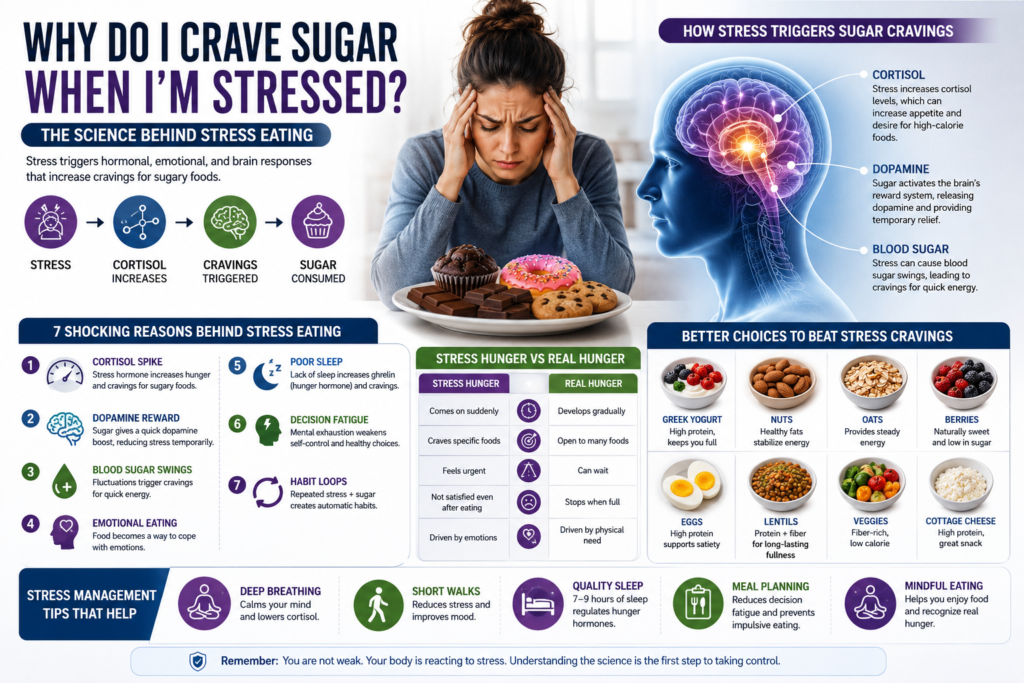
7 Shocking Reasons Stress Makes You Crave Sugar
1. Cortisol Increases Your Desire for Fast Energy
When you’re stressed, your adrenal glands release cortisol.
Originally, this response helped humans survive dangerous situations by making energy available quickly.
The problem?
Your body still reacts this way even when the stress comes from:
- Work deadlines
- Financial problems
- Relationship issues
- Lack of sleep
High cortisol levels can increase appetite and encourage cravings for energy-dense foods.
Unfortunately, sugary foods provide quick energy, making them especially attractive during stressful periods.
Real-Life Example
Imagine you’ve had a difficult day at work.
You arrive home feeling mentally exhausted.
Instead of craving grilled chicken and vegetables, your brain pushes you toward cookies, ice cream, or fast food.
This is often cortisol at work.
2. Sugar Activates the Brain’s Reward System
Sugar stimulates dopamine release.
Dopamine is associated with:
- Pleasure
- Motivation
- Reward
When you’re stressed, your brain naturally looks for ways to feel better.
Sweet foods provide a temporary dopamine boost.
For a short period, stress feels reduced.
The problem is that this relief is temporary.
As dopamine levels fall, cravings often return.
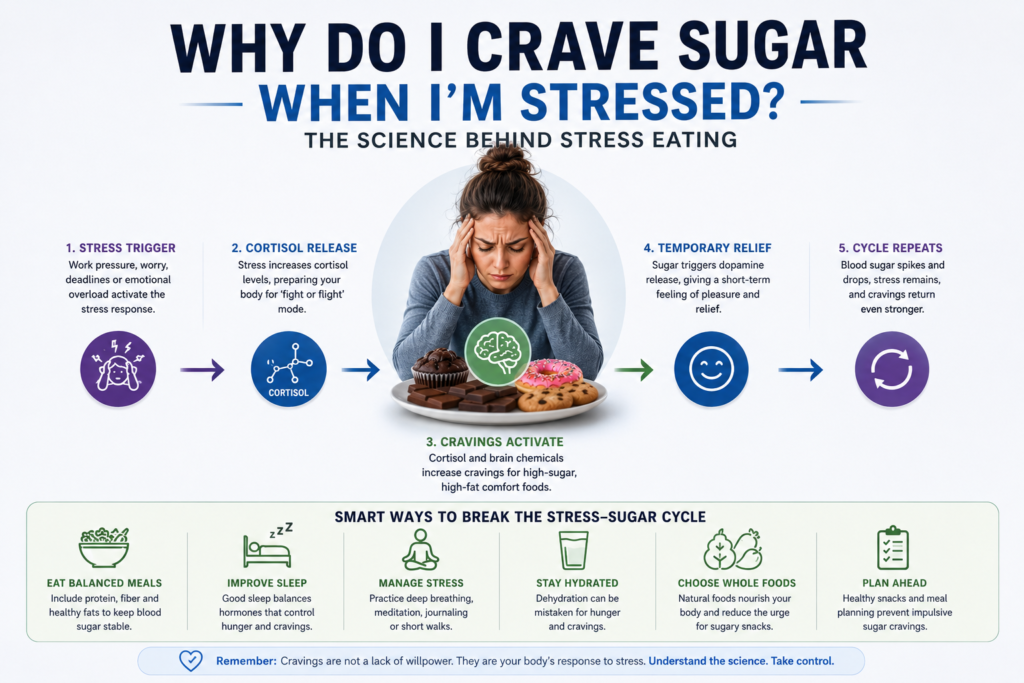
This creates a cycle:
Stress → Sugar → Temporary Relief → More Cravings
3. Stress Can Cause Blood Sugar Swings
Many people underestimate the connection between blood sugar and cravings.
When stress levels increase, blood sugar regulation can become less stable.
This may lead to:
- Energy crashes
- Fatigue
- Increased hunger
- Strong sugar cravings
The brain relies heavily on glucose.
When blood sugar drops, your brain often demands fast carbohydrates.
Unfortunately, this can create a repeating cycle of spikes and crashes.
Practical Solution
Instead of reaching for candy or soda, focus on meals that include:
- Protein
- Fiber
- Healthy fats
These nutrients help support more stable energy levels throughout the day.
Real-Life Scenario: The Afternoon Stress Craving
Sarah works in a busy office.
Every day around 3 PM she craves chocolate.
She assumes she’s addicted to sugar.
After tracking her habits, she notices a pattern:
- Work stress peaks around 2 PM.
- Lunch is mostly refined carbohydrates.
- Energy crashes occur one hour later.
The issue isn’t simply sugar.
It’s stress plus unstable blood sugar.
Once she adds more protein and fiber to lunch, her cravings become significantly easier to manage.
4. Stress Triggers Emotional Eating
One of the biggest reasons people crave sugar during stressful periods has nothing to do with hunger.
It’s about emotional regulation.
Food can temporarily provide:
- Comfort
- Distraction
- Relief
- Familiarity
Many people unknowingly learn this behavior during childhood.
For example:
- Feeling sad → getting ice cream
- Feeling stressed → eating sweets
- Celebrating success → eating desserts
Over time, the brain starts associating sugar with emotional relief.
Warning Sign
Ask yourself:
“Would I eat an apple right now?”
If the answer is no, but you desperately want chocolate or cookies, the craving may be emotional rather than physical.
Practical Solution
Before eating, pause for 60 seconds and ask:
- Am I hungry?
- Am I stressed?
- Am I bored?
- Am I anxious?
This simple habit helps break automatic stress-eating patterns.
5. Poor Sleep Makes Sugar Cravings Worse
Stress and poor sleep often occur together.
Unfortunately, lack of sleep can amplify cravings dramatically.
Research suggests that sleep deprivation may:
- Increase ghrelin (hunger hormone)
- Reduce leptin (fullness hormone)
- Increase appetite
- Increase cravings for sugary foods
This is why many people notice stronger cravings after a poor night’s sleep.
Real-Life Example
After sleeping only five hours, you may:
- Feel tired
- Feel hungrier
- Crave more sugar
- Snack more frequently
The body is searching for quick energy.
Practical Solution
Aim for:
✔ 7–9 hours of sleep
✔ Consistent bedtime
✔ Reduced screen exposure before bed
✔ Better sleep quality
Improving sleep often reduces cravings more effectively than strict dieting.
6. Decision Fatigue Weakens Self-Control
Your brain makes thousands of decisions every day.
As mental energy becomes depleted, decision-making quality declines.
Psychologists call this:
Decision Fatigue
When decision fatigue sets in:
- Healthy choices become harder
- Impulse control decreases
- Sugar becomes more tempting
This explains why many people eat well all day but lose control at night.
Example
Morning:
✔ Healthy breakfast
✔ Healthy lunch
✔ Good choices
Evening:
❌ Ice cream
❌ Cookies
❌ Chips
The issue may not be hunger.
It may be mental exhaustion.
Practical Solution
Reduce decision-making around food.
Examples:
- Meal prep
- Planned snacks
- Consistent meal schedule
The fewer food decisions you need to make under stress, the easier healthy eating becomes.
7. Stress Strengthens Habit Loops
Sometimes cravings have nothing to do with hunger.
They’re habits.
The brain loves routines.
Example:
Every evening:
Stress → TV → Ice Cream
After repeating this pattern enough times, the brain automatically expects sugar whenever the routine begins.
This becomes a neurological shortcut.
Even if you’re not hungry.
Practical Solution
Replace the habit rather than fighting it.
Example:
Old Routine:
Stress → Cookies
New Routine:
Stress → Walk → Tea → Protein Snack
The goal is not perfection.
The goal is creating a healthier reward system.
Stress Hunger vs Real Hunger
Many people struggle to distinguish emotional cravings from genuine hunger.
Use this quick comparison:
| Real Hunger | Stress Hunger |
|---|---|
| Develops gradually | Appears suddenly |
| Any food sounds good | Specific foods desired |
| Can wait a little | Feels urgent |
| Stops when full | Often continues |
| Comes from physical need | Comes from emotions |
Understanding this difference can dramatically improve appetite control.
What to Eat When Stress Triggers Cravings
Instead of fighting cravings with willpower alone, focus on foods that improve satiety and blood sugar stability.
Better Choices
| Food | Why It Helps |
|---|---|
| Eggs | High protein |
| Greek yogurt | Supports fullness |
| Lentils | Protein + fiber |
| Oats | Stable energy |
| Nuts | Healthy fats |
| Cottage cheese | Protein-rich snack |
| Vegetables | Fiber and volume |
| Berries | Lower sugar option |
Example Stress-Control Snack
- Greek yogurt
- Berries
- Chia seeds
This combination provides protein, fiber, and slower-digesting carbohydrates.
Foods That May Make Stress Cravings Worse
| Limit More Often | Why |
|---|---|
| Candy | Quick sugar spike |
| Soda | Energy crash |
| Pastries | Low satiety |
| Sugary cereals | Blood sugar swings |
| Energy drinks | Temporary stimulation |
| Sweet coffee drinks | High sugar content |
These foods often provide short-term relief but may increase cravings later.
Real-Life Scenario: The Evening Stress Eater
Michael works long hours.
Every night after work he eats dessert while watching television.
He believes he lacks discipline.
However, after tracking his habits, he discovers:
- Stress is highest after work.
- Sleep quality is poor.
- Dinner lacks protein.
- Dessert has become a nightly habit loop.
After improving dinner quality and replacing dessert with Greek yogurt and berries three nights per week, cravings begin to decrease.
The solution wasn’t stronger willpower.
It was understanding the psychology behind the behavior.
When Food Alone Isn’t Enough
For many people, improving:
- Sleep quality
- Protein intake
- Stress management
- Meal structure
- Hydration
can significantly reduce cravings.
However, some individuals continue to experience:
- Constant sugar cravings
- Energy crashes
- Frequent snacking
- Blood sugar fluctuations
even after making healthy lifestyle changes.
In such situations, some people explore evidence-based nutritional supplements designed to support:
- Blood sugar balance
- Metabolic health
- Appetite control
If you’re researching options, you may find these evidence-focused guides helpful:
👉 GlucoTrustBite Review (2026): Does It Really Control Blood Sugar & Cravings?
👉 Gluco6 Review (2026): Can It Really Stop Cravings & Balance Blood Sugar?
Remember: supplements should support healthy habits—not replace them.
Common Mistakes That Make Stress Eating Worse
Many people accidentally strengthen sugar cravings without realizing it.
Mistake #1: Skipping Meals
Skipping meals often leads to:
- Extreme hunger
- Strong cravings
- Overeating later
Mistake #2: Trying to Use Willpower Alone
Willpower is limited.
The goal should be to build systems that reduce cravings rather than constantly fighting them.
Mistake #3: Drinking Too Much Sugar
Sweet coffee drinks, sodas, and energy drinks may increase blood sugar fluctuations and worsen cravings.
Mistake #4: Ignoring Stress
Many people focus only on food while ignoring the actual trigger.
If stress is causing the craving, food alone may not solve the problem.
Mistake #5: Poor Sleep Habits
Sleep deprivation and stress often work together to increase hunger and sugar cravings.
5-Minute Stress Eating Rescue Plan
The next time you crave sugar:
Step 1
Drink a large glass of water.
Step 2
Wait 10 minutes.
Step 3
Ask:
“Am I physically hungry or emotionally stressed?”
Step 4
If hungry:
Choose protein + fiber.
Examples:
- Greek yogurt
- Cottage cheese
- Apple + peanut butter
- Boiled eggs
Step 5
If stressed:
Try:
- Deep breathing
- Short walk
- Stretching
- Listening to music
Many cravings disappear once the emotional trigger is addressed.
Frequently Asked Questions
Why do I crave sugar when I’m stressed?
Stress increases cortisol levels and may activate reward pathways in the brain, making sugary foods more appealing.
Can stress really make me hungry?
Yes. Chronic stress can increase appetite, cravings, and emotional eating behaviors in many people.
Is stress eating a lack of willpower?
No. Stress eating often involves biological, hormonal, and psychological factors rather than simple self-control.
Why do I crave chocolate when stressed?
Chocolate contains sugar, fat, and compounds that stimulate reward pathways, making it a common comfort food during stressful periods.
Can poor sleep increase sugar cravings?
Yes. Poor sleep may increase hunger hormones and reduce fullness signals, leading to stronger cravings.
What foods help reduce stress cravings?
Protein-rich and fiber-rich foods such as eggs, Greek yogurt, lentils, vegetables, and nuts may help improve satiety.
Is emotional hunger different from real hunger?
Yes. Emotional hunger appears suddenly, targets specific foods, and often persists even after eating.
When should I talk to a healthcare professional?
Consider seeking professional advice if cravings are severe, worsening, or accompanied by significant weight changes, fatigue, or blood sugar concerns.
Key Takeaways
✔ Stress eating is often driven by biology—not weakness.
✔ Cortisol can increase appetite and cravings for quick energy.
✔ Sugar temporarily activates the brain’s reward system.
✔ Poor sleep can dramatically increase cravings.
✔ Emotional hunger feels different from physical hunger.
✔ Stable blood sugar may help reduce stress-related cravings.
✔ Understanding your triggers is often more effective than relying on willpower alone.
Trusted External Resources
For additional information about nutrition, appetite, and healthy eating:
- Harvard Nutrition Source
- CDC Healthy Eating Resources
- National Institute of Mental Health (NIMH) Stress Resources
- NIDDK Weight Management Resources
Final Thoughts
If you’ve ever wondered,
“Why do I crave sugar when I’m stressed?”
the answer is far more complex than a lack of willpower.
Stress affects hormones, brain chemistry, appetite regulation, sleep quality, blood sugar balance, and emotional behavior. Together, these factors can create powerful cravings for sweet foods.
The encouraging news is that cravings are not random.
Once you understand the psychological and biological triggers behind stress eating, you can begin building healthier responses.
If you’re still asking “Why do I crave sugar when I’m stressed?”, remember that stress, hormones, sleep, and blood sugar can all influence cravings.
Instead of fighting cravings with guilt, focus on:
- Better sleep
- Stress management
- Protein-rich meals
- Stable blood sugar
- Consistent habits
Small daily improvements often lead to the biggest long-term changes in appetite control, weight management, and metabolic health.