Author: Drx. Prashant Kumar
Category: Metabolic Health & Weight Loss
Updated: 2026
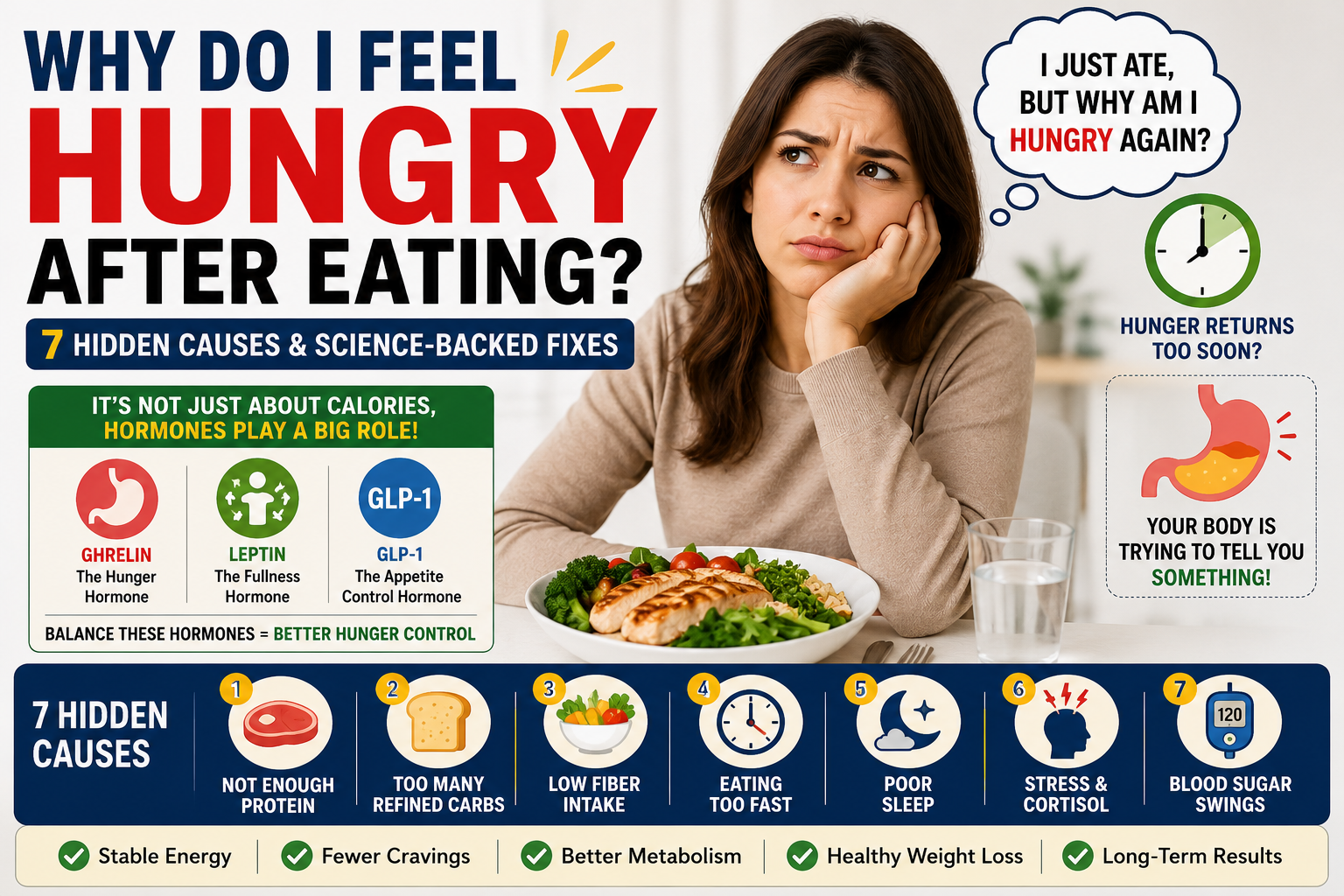
Why do I feel hungry after eating? Discover 7 hidden causes of constant hunger after meals and learn science-backed solutions to stay full longer naturally.
Quick Answer
If you feel hungry shortly after eating, the problem is not always that you need more food. In many cases, hunger after meals is caused by low protein intake, blood sugar spikes, lack of fiber, poor sleep, stress, dehydration, or appetite-regulating hormones such as GLP-1, ghrelin, and leptin.
Understanding the real cause can help you stay full longer, reduce cravings, and support healthy weight management.
Why Do I Feel Hungry After Eating?
Have you ever finished a meal, felt satisfied for a short time, and then found yourself looking for snacks an hour later?
Many people assume this means they didn’t eat enough.
However, hunger after eating is often more complicated than calorie intake alone.
Your body uses a complex system involving:
- Hunger hormones
- Blood sugar levels
- Digestion speed
- Food quality
- Sleep
- Stress
When one or more of these factors become unbalanced, you may feel hungry even after eating a seemingly large meal.
The good news is that most of these causes can be improved with practical lifestyle changes.
The Science Behind Hunger and Fullness
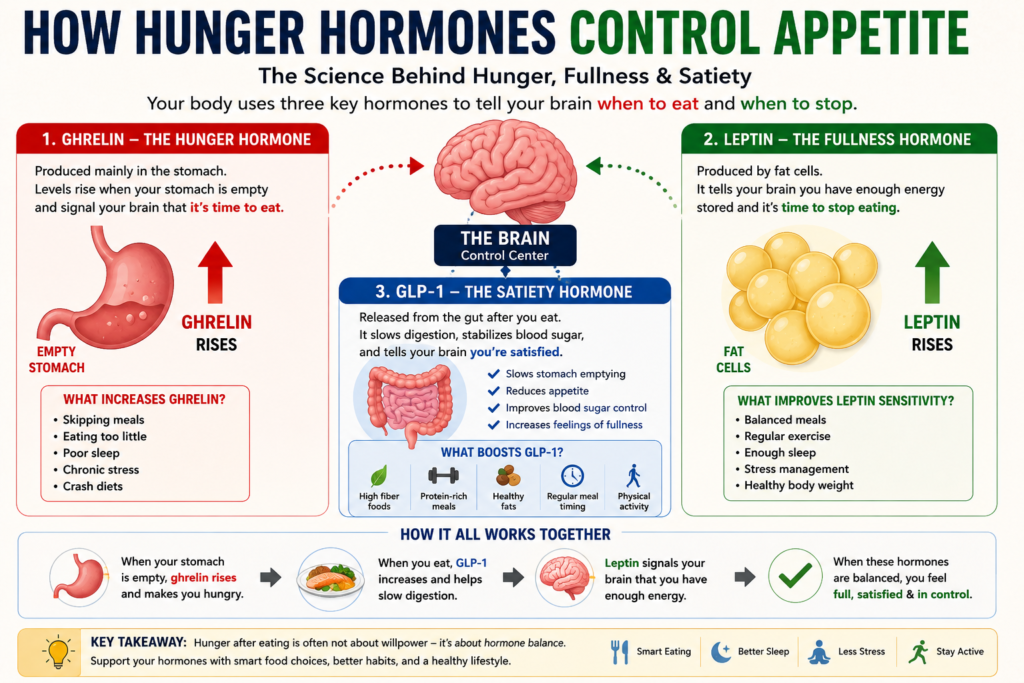
Before looking at the causes, it helps to understand the main hormones involved in appetite regulation.
Ghrelin: The Hunger Hormone
Ghrelin is produced primarily in the stomach.
When your stomach is empty, ghrelin levels rise and signal your brain that it’s time to eat.
Higher ghrelin levels generally increase hunger.
Leptin: The Fullness Hormone
Leptin is produced by fat cells.
Its job is to tell the brain that your body has enough stored energy.
When leptin signaling works properly, you feel satisfied after eating.
GLP-1: The Appetite-Control Hormone
GLP-1 helps slow stomach emptying and increases feelings of fullness.
It also plays an important role in blood sugar regulation.
Many modern weight-loss medications work by mimicking GLP-1 because of its powerful effects on appetite.
Blood Sugar and Hunger
Rapid increases and decreases in blood sugar can strongly influence appetite.
This is one reason why some meals keep you satisfied for hours while others leave you hungry very quickly.
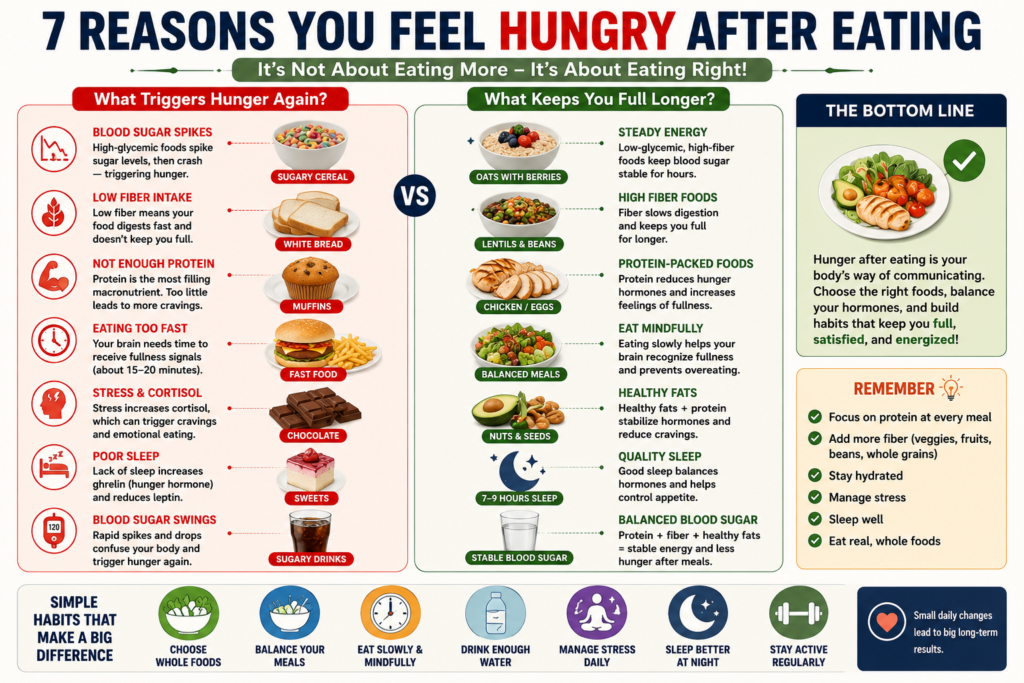
7 Hidden Causes of Hunger After Eating
1. You’re Not Eating Enough Protein
One of the most common reasons people feel hungry after eating is insufficient protein.
Protein is widely considered the most filling macronutrient.
A breakfast of toast and jam may contain enough calories, but it often lacks the protein needed to support satiety.
Example
Breakfast:
❌ White toast + sweet coffee
Better option:
✅ Eggs + Greek yogurt + fruit
The second meal provides significantly more protein and usually keeps people satisfied longer.
Practical Fix
Aim to include a protein source in every meal:
- Eggs
- Greek yogurt
- Cottage cheese
- Fish
- Chicken
- Tofu
- Lentils
Real-Life Scenario: The Busy Office Worker
Sarah starts her morning with coffee and a pastry.
By 10:00 AM she feels hungry again and reaches for another snack.
The issue isn’t necessarily calories—it’s that her breakfast lacked enough protein and fiber to support fullness.
2. Your Meal Contains Too Many Refined Carbohydrates
Refined carbohydrates digest quickly.
Examples include:
- White bread
- Pastries
- Sugary cereal
- Donuts
- Sweet drinks
These foods can cause rapid blood sugar spikes followed by sharp drops.
When blood sugar falls, hunger often returns.
Common Example
Breakfast:
❌ Sugary cereal
Result:
- Energy boost
- Blood sugar spike
- Energy crash
- Hunger returns quickly
Practical Fix
Choose slower-digesting carbohydrates:
- Oats
- Beans
- Lentils
- Whole grains
- Vegetables
These foods generally provide more stable energy.
3. You’re Not Getting Enough Fiber
Fiber slows digestion and helps increase feelings of fullness.
Many processed foods contain very little fiber.
As a result, they pass through the digestive system quickly and may not keep you satisfied for long.
Signs You May Need More Fiber
- Hunger shortly after meals
- Frequent snacking
- Difficulty controlling cravings
Practical Fix
Include more:
- Vegetables
- Fruits
- Beans
- Lentils
- Seeds
- Whole grains
A meal containing both protein and fiber is often far more satisfying than a meal high in refined carbohydrates alone.
4. You’re Eating Too Fast
Your brain needs time to receive fullness signals from your digestive system.
When you eat too quickly, you may consume a large amount of food before your brain realizes you’re full.
Many people finish meals in less than 10 minutes and then wonder why hunger returns soon afterward.
Signs You May Be Eating Too Fast
- You finish meals before others
- You rarely chew thoroughly
- You often feel overly full after meals
- Hunger returns quickly
Practical Fix
Try these strategies:
✔ Put your fork down between bites
✔ Chew food thoroughly
✔ Avoid scrolling on your phone while eating
✔ Aim for at least 15–20 minutes per meal
Mindful eating may improve satiety without changing the amount of food you eat.
Real-Life Scenario: The Working Professional
John often eats lunch at his desk while answering emails.
His meal lasts about seven minutes.
Although he eats enough calories, he rarely feels satisfied.
After slowing down and eating without distractions, he notices fewer afternoon cravings and improved hunger control.
5. Poor Sleep Is Increasing Hunger Hormones
Many people underestimate how strongly sleep affects appetite.
Research suggests that inadequate sleep may:
- Increase ghrelin (hunger hormone)
- Reduce leptin (fullness hormone)
- Increase cravings for sugary foods
- Reduce appetite control
This is one reason why people often crave high-calorie foods after a poor night’s sleep.
Common Pattern
Poor sleep → Increased hunger → More cravings → Overeating → Weight gain
Practical Fix
Aim for:
- 7–9 hours of sleep
- Consistent bedtime
- Reduced screen time before bed
- Better sleep quality
Many people notice improved appetite control after improving sleep habits.
6. Stress and Cortisol Are Driving Your Appetite
Stress doesn’t affect everyone the same way.
Some people lose their appetite.
Others feel hungry all day.
The hormone cortisol often rises during periods of chronic stress.
Elevated cortisol may increase cravings for:
- Sugary foods
- Salty snacks
- Comfort foods
- High-calorie meals
Signs Stress May Be Affecting Your Hunger
- Emotional eating
- Evening cravings
- Constant snacking
- Eating when not physically hungry
Practical Fix
Consider:
✔ Daily walks
✔ Deep breathing exercises
✔ Meditation
✔ Regular physical activity
✔ Better sleep habits
Managing stress may help reduce cravings more effectively than dieting alone.
Real-Life Scenario: The Stress Eater
Maria notices that she craves sweets every evening.
Initially, she assumes she lacks willpower.
After tracking her habits, she realizes her cravings are strongest on stressful workdays.
Addressing stress—not food—becomes the solution.
7. Blood Sugar Swings Are Triggering Hunger
This is one of the most overlooked causes of hunger after eating.
When blood sugar rises rapidly and then falls, your body may interpret the drop as a need for more food.
This can happen even if you’ve eaten recently.
Common Trigger Foods
- Sugary cereals
- Candy
- Soft drinks
- White bread
- Sweet pastries
Symptoms
- Hunger shortly after meals
- Cravings for sugar
- Energy crashes
- Afternoon fatigue
Practical Fix
Build meals around:
| Include More | Limit |
|---|---|
| Protein | Sugary drinks |
| Fiber | Candy |
| Vegetables | Pastries |
| Whole grains | White bread |
| Healthy fats | Highly processed snacks |
Stable blood sugar often leads to better appetite control.
What to Eat If You’re Hungry After Eating
The goal isn’t necessarily to eat more food.
The goal is to eat foods that support satiety.
Hunger-Control Foods
| Food | Why It Helps |
|---|---|
| Eggs | High protein |
| Greek yogurt | Protein-rich |
| Lentils | Protein + fiber |
| Oats | Slow digestion |
| Beans | Fiber-rich |
| Cottage cheese | Supports fullness |
| Vegetables | Volume + fiber |
| Nuts | Healthy fats + protein |
These foods generally help keep people satisfied longer than highly processed alternatives.
Sample Hunger-Control Meal Plan
Breakfast
- Eggs
- Oatmeal
- Fresh berries
Why It Works
Protein + fiber = improved satiety.
Lunch
- Grilled chicken
- Mixed vegetables
- Brown rice
Why It Works
Balanced blood sugar and slower digestion.
Afternoon Snack
- Greek yogurt
- Chia seeds
Why It Works
Reduces evening cravings.
Dinner
- Fish or lentils
- Vegetables
- Healthy fats
Why It Works
Supports fullness without excessive calories.
Common Mistakes That Make Hunger Worse
Even people who eat healthy foods sometimes struggle with constant hunger because of a few common mistakes.
Mistake #1: Skipping Breakfast
Many people skip breakfast to reduce calories.
Unfortunately, this often leads to:
- Increased hunger later
- Stronger cravings
- Overeating at lunch
If you frequently feel hungry after meals, skipping breakfast may be making the problem worse.
Mistake #2: Drinking Your Calories
Sweetened coffee drinks, energy drinks, and sugary beverages often provide calories without much satiety.
Many people consume hundreds of calories from drinks yet still feel hungry.
Better Choices
✔ Water
✔ Unsweetened tea
✔ Black coffee
✔ Sparkling water
Mistake #3: Not Drinking Enough Water
Sometimes thirst feels surprisingly similar to hunger.
Before reaching for a snack, try drinking a glass of water and waiting 15–20 minutes.
Many people discover they were actually dehydrated rather than hungry.
Mistake #4: Focusing Only on Calories
A 400-calorie donut and a 400-calorie protein-rich meal affect hunger very differently.
Food quality matters just as much as calorie quantity.
Mistake #5: Ignoring Sleep and Stress
Many people focus only on food while ignoring the two biggest drivers of cravings:
- Poor sleep
- Chronic stress
Improving these areas often improves appetite control naturally.
When Food Alone Isn’t Enough
For many people, improving:
- Protein intake
- Fiber intake
- Sleep quality
- Hydration
- Meal timing
is enough to reduce hunger significantly.
However, some individuals continue to experience excessive hunger, strong cravings, and blood sugar fluctuations despite making healthy lifestyle changes.
In these situations, some people choose to explore evidence-based nutritional supplements designed to support:
- Blood sugar balance
- Metabolic health
- Appetite control
If you’re researching options, you may find our detailed review helpful:
👉 GlucoTrustBite Review (2026): Does It Really Control Blood Sugar & Cravings?
👉How to Boost GLP-1 Naturally Without Medication (7 Proven Ways)
Remember that supplements should support healthy habits—not replace them.
Frequently Asked Questions
Why do I feel hungry one hour after eating?
This may happen because your meal lacked protein, fiber, or healthy fats, or because blood sugar levels rose and fell quickly after eating.
Why am I hungry even after eating a large meal?
Meal size does not always determine fullness. Food quality, hormone balance, and digestion speed often play a larger role.
Can blood sugar problems cause constant hunger?
Yes. Rapid blood sugar fluctuations may trigger hunger, cravings, and energy crashes even after eating
Does protein really help reduce hunger?
Protein is widely considered one of the most filling nutrients and may help reduce hunger between meals.
Can stress make me feel hungry all the time?
Yes. Chronic stress may increase cortisol levels, which can increase cravings and appetite in some people.
Why do I feel hungry after eating carbs?
Refined carbohydrates digest quickly and may cause blood sugar spikes followed by crashes that trigger hunger.
What food keeps you full the longest?
Protein-rich and fiber-rich foods such as eggs, Greek yogurt, lentils, beans, fish, vegetables, and whole grains generally provide the greatest satiety.
When should I talk to a doctor about constant hunger?
Consider speaking with a healthcare professional if excessive hunger is persistent, worsening, or accompanied by symptoms such as unexplained weight changes, extreme thirst, fatigue, or blood sugar concerns.
Key Takeaways
✔ Hunger after eating is not always caused by a lack of food.
✔ Protein, fiber, blood sugar balance, sleep quality, and stress all affect appetite.
✔ Eating too quickly can reduce feelings of fullness.
✔ Blood sugar swings are one of the most common causes of post-meal hunger.
✔ Improving meal quality often works better than simply eating more.
Trusted External Resources
For additional information on healthy eating and appetite regulation:
Final Thoughts
If you’ve ever wondered, “Why do I feel hungry after eating?”, you’re not alone.
In many cases, the problem isn’t a lack of food—it’s a lack of satiety.
Protein intake, fiber intake, blood sugar control, sleep quality, stress management, and appetite-regulating hormones all influence how full you feel after meals.
Instead of focusing only on eating less, focus on eating smarter.
Building meals around protein, fiber, whole foods, and healthy habits may help reduce hunger naturally, improve appetite control, and support long-term metabolic health.
Small daily changes often create the biggest long-term results.